Article Highlights
- GST is Australia’s 10% goods and services tax that applies to most business sales, and you must register when your turnover hits $75,000 in a rolling 12-month period.
- Once registered, you charge GST on taxable sales and can claim back GST credits on business purchases through your BAS lodgements.
- Understanding what’s taxable, GST-free, or input-taxed helps you price correctly and avoid compliance issues with the ATO.
If you’re running a small business in Perth or anywhere across Australia, you’ve probably heard the term GST thrown around. But what is GST, exactly? And more importantly, when do you actually need to register for it?
Let’s be real, tax stuff can feel overwhelming when you’re busy running your business. The good news is that GST doesn’t have to be complicated once you understand the basics. We’re going to walk you through everything you need to know, in plain English.
What is GST?
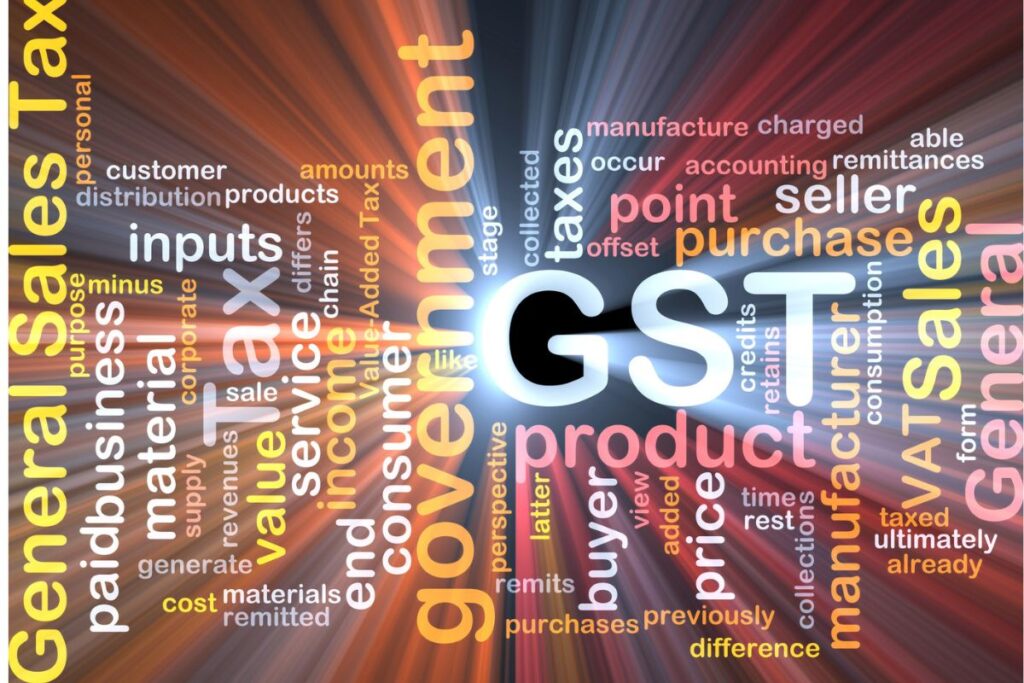
GST stands for Goods and Services Tax. It’s a broad-based 10% tax that applies to most goods, services, and digital products sold or consumed in Australia. Introduced back on 1 July 2000, GST is collected by businesses on behalf of the Australian Taxation Office (ATO).
Here’s how it works in simple terms. When you’re GST-registered and you sell something, you add 10% to the price and collect that from your customer. Then, when you buy business supplies or services, you pay GST on those purchases. At the end of each reporting period (usually quarterly), you calculate the difference and either pay the net amount to the ATO or receive a refund if you’ve paid more GST than you’ve collected.
Think of it as a value-added tax that moves through the supply chain. You’re essentially a collector for the ATO, but you also get to claim back the GST you’ve paid on legitimate business expenses.
When do you have to register for GST?
This is the big question most business owners ask. You must register for GST when your business turnover reaches or is projected to reach $75,000 or more in a rolling 12-month period. That’s the current threshold at the time of writing, and it applies to most businesses across Australia.
There are a few other situations where GST registration becomes mandatory:
- You provide taxi, ride-share, or limousine services (like Uber drivers), regardless of your turnover
- You want to claim fuel tax credits
- You’re importing services or digital products and need reverse-charge treatment
Once you hit that $75,000 threshold, you’ve got 21 days to register with the ATO. It’s worth keeping an eye on your turnover so you don’t get caught out.
For not-for-profit organisations, the threshold is higher at $150,000.
Here’s something many Perth tradies and small business owners don’t realise: if you’re charging $7,000 per job (like a tiler doing bathroom renovations), you’ll hit that threshold after just 11 jobs. It can sneak up on you faster than you think, especially in WA’s construction and mining services sectors where contract values run high.
Can you register voluntarily?
You can register for GST even if you’re earning under $75,000. Some businesses choose to do this because it makes them look more established or because they want to claim back GST on business purchases.
Just keep in mind that once you register voluntarily, you need to stay registered for at least 12 months. You’ll also need to lodge your BAS even if you have nothing to report. If your turnover later drops below $75,000, you can apply to cancel your registration.

How does GST work in practice?
The GST cycle is pretty straightforward once you get the hang of it:
- Charge GST on your sales. Add 10% to your taxable sales (this is called output GST).
- Pay GST on business purchases. You pay 10% GST on most things you buy for your business (this is called input GST).
- Report through your BAS. You report these amounts in your Business Activity Statement, usually quarterly.
- Pay the difference. Your net GST equals output GST minus input GST. You either pay this to the ATO or receive a refund if you’ve paid more than you collected.
This is where good bookkeeping services become essential. Keeping accurate records of all your sales and purchases makes BAS time much less stressful.
What Includes GST?
Most goods and services in Australia are taxable, meaning they include that 10% GST. This covers things like:
- Retail products and goods
- Tradie labour and repairs
- Professional consulting and services
- Restaurant meals and hospitality
- Digital downloads and software subscriptions
- Merchant service fees (more on this in a moment)
However, some items are GST-free, meaning they’re taxed at 0%. These include:
- Basic unprocessed food (think bread, milk, meat, fruit and vegetables)
- Most health and medical services
- Education courses
- Childcare services
- Exports
- Some charitable services
Then there are input-taxed supplies, where no GST applies and you can’t claim credits. The main ones are residential rent and most financial services like interest and bank fees.
The ATO website has a full list of GST-free items if you need to check something specific.
Do merchant fees have GST?
Yes, they do. This catches a lot of business owners by surprise.
When Australian banks and payment processors (like Square, Stripe, or traditional merchant services) charge you fees for processing card payments, those fees include 10% GST. If you’re GST-registered and the underlying sale was taxable, you can claim back the GST on those merchant fees as an input tax credit.
Card surcharges you pass on to customers follow the GST treatment of the underlying sale. So if you’re selling something taxable and you add a card surcharge, that surcharge is also taxable.
What GST can I claim back?
Once you’re registered, you can claim GST credits (also called input tax credits) on business purchases that relate to making taxable or GST-free sales. Common examples include:
- Stock and inventory purchases
- Tools and equipment
- Software subscriptions
- Phone and internet bills
- Vehicle fuel
- Merchant service fees
- Office supplies
To claim these credits, you need a valid tax invoice showing the supplier’s ABN and the GST amount. For purchases over $82.50 (including GST), the invoice must include specific details. Your Xero bookkeeping system can help track these automatically.
You can’t claim GST on purchases used for making input-taxed supplies or for private use.
Special considerations for sole traders
If you’re a sole trader, the same $75,000 threshold applies to you. The turnover test counts your gross business income before expenses.
One thing to note: personal income from wages (if you also work for someone else) doesn’t count toward the GST turnover test. It’s only your sole trader business income that matters.
Once you register, you’ll need to quote your ABN on all invoices and add 10% GST to your prices. Make sure you’re keeping your business and personal finances separate so your records stay clean.

Getting help with GST and BAS
GST registration changes how you price, invoice, and report your business finances. It’s not just a once-off registration, it’s an ongoing compliance requirement that flows through to your quarterly BAS lodgements.
If you’re approaching that $75,000 threshold or you’ve already crossed it, now’s the time to get your systems sorted. At Advanced Bookkeeping and BAS, we work with businesses and sole traders across WA to handle GST registration, ongoing compliance, and BAS lodgements. We’re Registered BAS Agents, which means we’re qualified to give you advice and lodge on your behalf.
Our bookkeeping packages include GST tracking, BAS preparation, and ongoing support so you don’t have to stress about deadlines or calculations. We also offer payroll services if you’re managing staff and need help with Single Touch Payroll and super.
Questions Meet Answers
Should I register for GST if I earn under $75,000?
It’s not compulsory, but you can register voluntarily if you want to claim input tax credits or present your business as more established. Just remember you’ll need to stay registered for at least 12 months and lodge your BAS each period, even if it’s nil.
Do I need to pay GST as a sole trader?
Only when your sole trader business turnover hits $75,000 or more in a rolling 12-month period (or if you provide ride-share services). Income from wages or other employment doesn’t count toward this threshold, just your business income.
Which items are included in GST?
Most products and services are taxable at 10%, including retail goods, repairs, consulting, restaurant meals, digital products, and merchant fees. GST-free items include basic food, most health services, education, childcare, and exports.
What GST can I claim back?
You can claim GST on business expenses that relate to making taxable or GST-free sales. Common examples are stock purchases, tools, software, phone bills, fuel, and merchant fees. You’ll need valid tax invoices and must be GST-registered to claim these credits.